
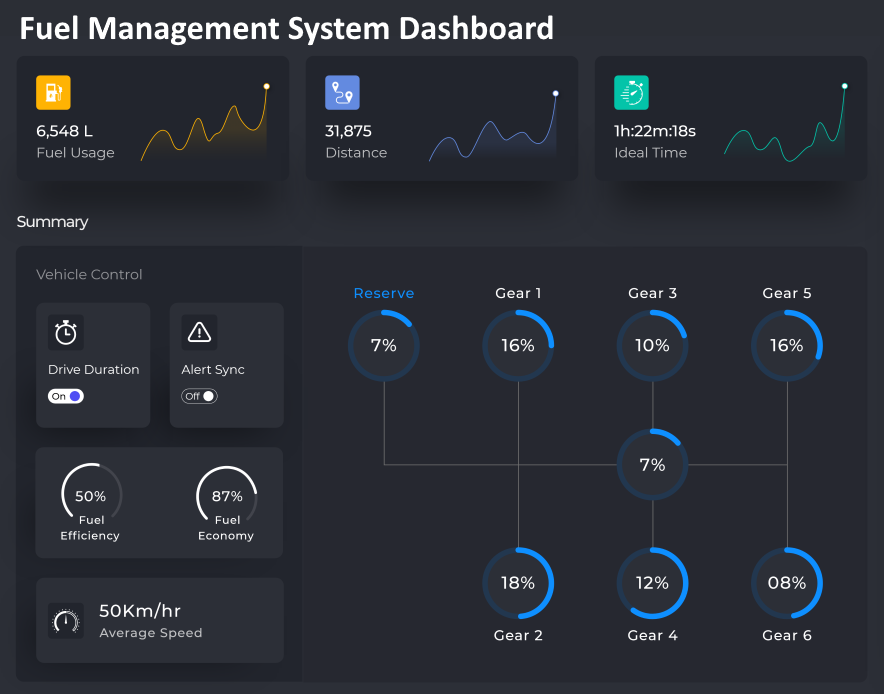
Fuel costs can significantly impact the bottom line for businesses across various industries. From transportation fleets to construction companies, optimizing fuel usage is crucial for profitability and sustainability. Advanced fuel management systems (FMS) have emerged as powerful tools to help organizations achieve this goal.
How Advanced Fuel Management Systems Work
FMS leverage technology to track and analyze fuel consumption data. This data can include:
- Real-time fuel level monitoring: Sensors track fuel levels in tanks, providing accurate and up-to-date information.
- Fuel usage tracking: Systems monitor fuel consumption by individual vehicles or equipment.
- Fuel card usage: Tracking fuel card transactions helps identify unauthorized usage or potential fraud.
- Driver behavior analysis: Advanced systems can analyze driving habits, such as harsh braking or excessive idling, which can significantly impact fuel efficiency.
Key Benefits of Implementing an FMS
- Reduced Fuel Costs: By identifying inefficiencies in fuel usage, FMS can help reduce fuel consumption and associated costs.
- Improved Operational Efficiency: Real-time data and analytics enable fleet managers to optimize routes, schedule maintenance, and improve overall operational efficiency.
- Enhanced Security: FMS can help prevent fuel theft and unauthorized usage, reducing losses and improving security.
- Data-Driven Decision Making: The data collected by FMS provides valuable insights for informed decision-making regarding fuel procurement, vehicle maintenance, and driver training.
- Improved Environmental Sustainability: By reducing fuel consumption, FMS can help businesses reduce their carbon footprint and contribute to a more sustainable future.
Implementing an FMS: Best Practices
- Choose the right system: Select a system that meets your specific needs and integrates seamlessly with your existing operations.
- Invest in driver training: Educate drivers on fuel-efficient driving techniques to maximize the impact of the FMS.
- Regularly review and analyze data: Monitor key performance indicators (KPIs) and use data insights to make informed adjustments to your fuel management strategy.
- Ensure proper maintenance: Regular vehicle maintenance, including tire pressure checks and engine tune-ups, can significantly improve fuel efficiency.
Conclusion
In today’s competitive business landscape, optimizing fuel efficiency is essential for profitability and sustainability. Advanced fuel management systems offer a powerful solution for businesses to gain better control over their fuel costs, improve operational efficiency, and reduce their environmental impact. By implementing an FMS and leveraging the data it provides, organizations can make informed decisions, enhance their bottom line, and contribute to a more sustainable future.